
 The Art Behind the Alterations — It’s Never Just a Hem
Bridal alterations are often described as “just taking it up” or “a few small tweaks.” In reality, this is the stage where experience, judgement and craftsmanship matter most — because once the scissors come out, there’s no going back.
Alterations aren’t simply about changing a dress. They’re about understanding how fabric behaves, how a body moves, and how to make a gown hang beautifully and feel effortless for the person wearing it.
 What you don’t see
A finished hem or perfectly fitted bodice might look simple, but behind the scenes there is:
-
- assessing balance and structure
- understanding weight, grain and movement
- managing bias and multiple layers
- shaping fabric by hand
- making decisions that can’t be undone
The stitching itself is only one part of the process. Much of the skill lies in knowing what needs to be done in the first place.
 A real example
I once had a bride come in for a quote. Her wedding was quite soon, so as I normally do, I carefully assessed the dress, pinned what I felt needed adjusting, and talked her through the work.
As we finished, she said she had other appointments to get more quotes. That’s absolutely her choice, so I removed the pins, wished her well and she went on her way.
A few days later she called back and said she wanted me to do the alterations. I asked if the other appointments had been more expensive. She said, “No — they were about half your price. But you pointed out fourteen things that needed doing to my dress. The others only mentioned two. I’d rather have somebody working on my dress who really knows what they’re doing.”
And that, in many ways, is what bridal alterations are about — experience isn’t just sewing, it’s seeing.

 The ship and the hammer
There’s an old story about a ship that breaks down. Engineers try everything, but nothing works. Eventually, a specialist is called in. He walks around the ship, listens carefully, takes out a small hammer and taps one specific spot. The engine starts immediately. The bill arrives: £1,000.
The owners complain — “It only took five minutes!” The reply comes back:
-
- Hammer tap — £1.
- Knowing where to tap — £999.
Bridal alterations are much the same. The sewing itself may look straightforward, but knowing where, why and how to alter a dress comes from years of experience.

 It’s not just the outside of the dress
A big part of bridal alterations isn’t even visible once the dress is finished. Knowing which foundation garments will work — or won’t — can completely change how a gown fits and moves. Sometimes the solution isn’t simply altering the outer layer at all, but advising on the right bra, shapewear or underskirt. Other times, it’s about adding or adjusting internal structure:
-
- hidden support
- cups or internal bust shaping
- extra layers for balance
- subtle structural changes that improve fit without changing the look
These are decisions based on experience — understanding how the dress should feel as much as how it should look.

Beyond alterations — personalising your dress
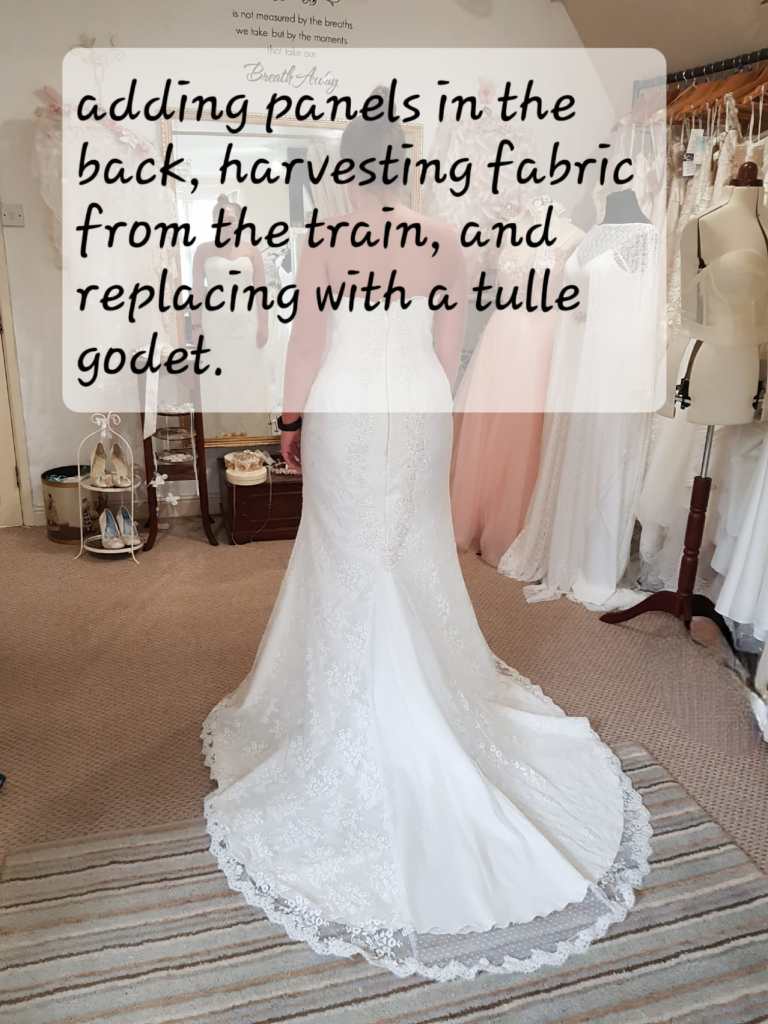
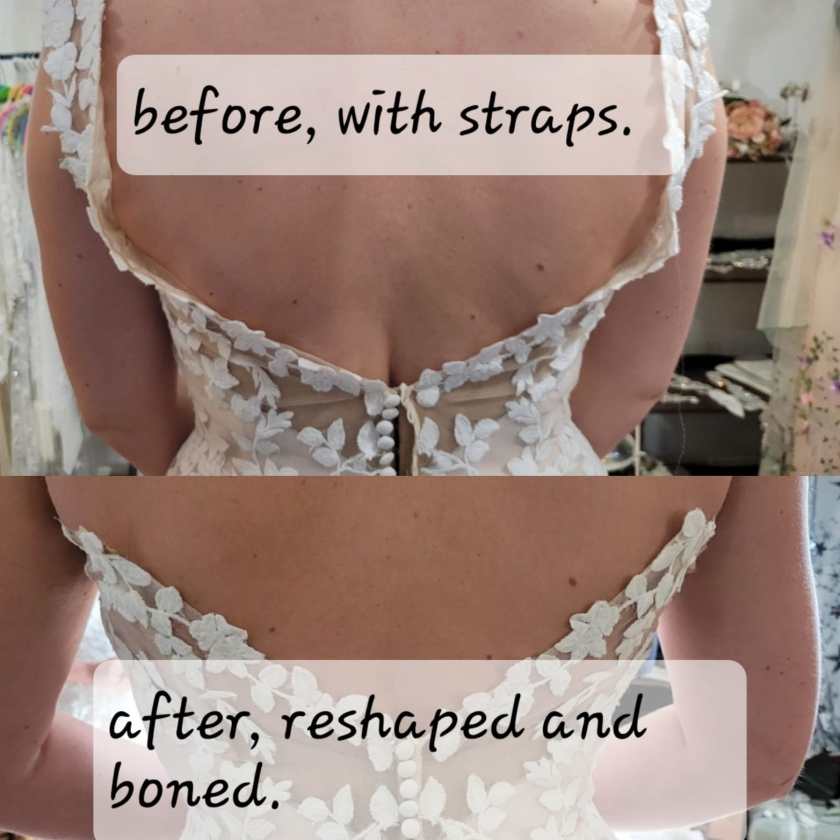
In many cases, if you choose someone who is both a skilled bridal seamstress and an experienced dressmaker, alterations can go far beyond simply adjusting fit. Bespoke additions or redesigns can transform a gown into something truly personal, such as:
-
- adding sleeves or straps
- redesigning necklines
- creating overskirts or detachable elements
- incorporating lace, detail or features that reflect your style
These kinds of changes require design knowledge as well as technical skill — and they allow a dress to become not just well-fitted, but uniquely yours.
Artisan skill vs mass production
A gown may have been manufactured at scale, often overseas and produced in large numbers. Alterations are something entirely different. This is skilled artisan work, carried out individually, by hand, by someone you trust to reshape and perfect what is often the most expensive garment you will ever wear. These two things are not comparable — and they shouldn’t be measured purely by price.

Choosing a seamstress
Choosing who alters your dress should be a researched, informed decision. Not simply “Who is cheapest?” but rather “Who do I trust with my dress?” Because the real value isn’t just in the stitching — it’s in the judgement behind every decision.
 The reality behind the work
From first consultation to final fitting, bridal alterations are rarely quick. Communication, fittings, assessment, preparation, sewing, pressing and finishing all take time — and on average the process takes somewhere between 7 and 14 hours, depending on the gown and the complexity of the work. Professional seamstress rates will vary, but you should expect to pay roughly £25–£75 per hour for skilled bridal alterations. Rates vary depending on:
-
- experience and specialist knowledge
- location
- business model
- level of service and expertise
It’s also worth remembering that a seamstress does not take home the full hourly rate. A significant proportion goes into running a professional environment — a warm, tidy, secure, legal and insured space where you can feel confident handing over your most expensive dress… to someone with a slight scissors obsession. Which is why, for most brides, it’s sensible to budget around £450–£500 for alterations — unless your needs are very minimal.
 It’s never just a hem
Behind every beautiful finished gown is not just sewing, but years of skill, judgement and care. And that — more than anything — is the art behind the alterations.